The Home Office Dream (and the Insurance Reality)
Sarah loved her condo. Tucked away in a quiet corner of Ventura County, it was perfect for her graphic design business. After the pandemic, she’d officially ditched the commute, transforming her spare bedroom into a bright, airy home office. She had her top-of-the-line Mac, a massive curved monitor, a professional-grade printer, and a slick standing desk. “My HOA covers the building, my HO6 covers my stuff, I’m good,” she’d thought, feeling pretty smart about her setup. Many folks feel that way.
But here’s the thing. That “good” feeling often comes from a basic understanding of insurance, not a deep one. What Sarah didn’t fully grasp — and what a lot of California condo owners working from home overlook — is that “your stuff” takes on a whole new meaning when it’s also “your business’s stuff.” And “liability” isn’t just about someone slipping on your wet kitchen floor anymore. It might involve a client visiting your home, or even a data breach that could cost you thousands.
Honestly, the lines blur fast when your home becomes your livelihood. Your standard HO6 policy, while a lifesaver for personal property, rarely stretches to cover the specific risks of a working business. That’s a big difference.
Why Your Standard HO6 Probably Isn’t Enough
Let’s break down what your typical HO6 policy does. It’s a specialized policy for condo owners, covering your personal property inside your unit – your furniture, clothes, electronics, and so on. It also covers the interior structure of your unit, like your walls, flooring, and fixtures, from certain perils like fire or water damage. You’ll get some personal liability protection too, which kicks in if a friend trips over your rug and gets hurt.
But when you open up shop from your living room? The picture changes. Most HO6 policies cap coverage for business property at a surprisingly low amount, often around $2,500. Think about that. Sarah’s Mac alone probably cost more than that, let alone her specialized design software, large format printer, and professional camera gear. That’s not the whole story. What if a client comes to your home office for a meeting and has an accident? Your personal liability coverage might just tell you “that’s a business risk, not a personal one.” And if a fire forces you out, your HO6 might cover your temporary living expenses, but it certainly won’t replace the income you lose because you can’t work.
Business Property: More Than Just a Laptop
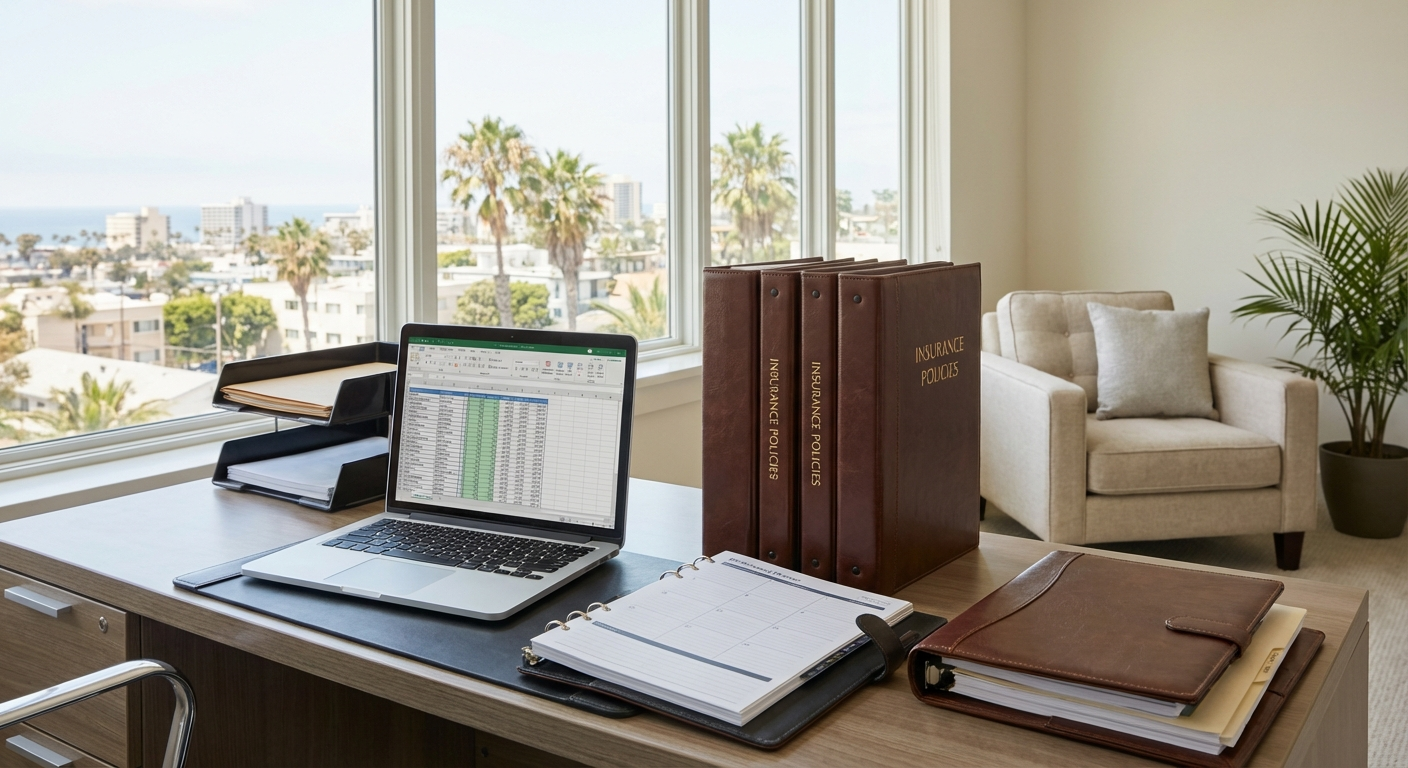
Consider Sarah’s office again. She’s got that expensive Mac, maybe a high-end Wacom tablet, professional-grade lighting for client video calls, and a backup server. These aren’t just personal items; they’re the tools of her trade. If a pipe bursts in her upstairs neighbor’s unit and floods her office, damaging everything, her standard HO6 might only give her a fraction of what she needs to replace it all. The difference between what’s needed and what’s covered can be huge, especially for specialized equipment.
Which brings up something most people miss. Insurance policies often distinguish between “replacement cost” and “actual cash value.” Replacement cost pays to replace your damaged items with new ones. Actual cash value, however, factors in depreciation – meaning you get what your old items were worth *at the time of damage*. For rapidly depreciating tech, that can leave you with a big gap. You don’t want to be staring at a waterlogged computer and realize the check won’t even cover half of a new one.
Beyond the Basics: What You Might Be Missing
Business equipment is one thing, but running a home office in California means facing other risks that your HO6 won’t touch.
* **Data Breach/Cyber Liability:** Let’s say Sarah stores client data on her computer. If her system is hacked and that data is exposed, she could be on the hook for notification costs, credit monitoring, and even legal fees. Personal policies don’t cover this.
* **Professional Liability (Errors & Omissions):** If you provide advice, designs, or services—like Sarah does—and a client claims your work caused them financial harm, you could be sued. A standard HO6 won’t help you with these kinds of professional claims.
* **Business Interruption:** Imagine a wildfire evacuation order forces you out of your condo in the Santa Monica Mountains for a month. Or maybe a sewage backup makes your home office unusable for weeks. Your HO6 might pay for a hotel, but it won’t replace your lost income during that downtime.
* **Off-Premises Coverage:** Perhaps you take your laptop to a coffee shop in the Valley or a co-working space downtown. If it’s stolen there, some home office endorsements might extend coverage, but a basic HO6 likely won’t recognize it as business property once it leaves your home.
The Liability Question: When Work Gets Personal
This is where it gets interesting. What if Sarah invites a potential client to her condo in Irvine for a design pitch, and the client slips on a rug in her hallway, breaking an arm? Most personal liability policies on an HO6 are designed for personal guests—friends, family—not business associates. An insurer might argue that the injury occurred during a business interaction, and therefore, it’s a business liability, not a personal one. That’s a mess you don’t want to deal with.
Independent contractors, freelancers, consultants—they all face this unique blend of personal and professional risk. If you have even one part-time assistant, you might also need to consider workers’ compensation insurance, a whole other ballgame. These are complex issues, and the insurance landscape in California has been particularly turbulent. Insurers like State Farm, AAA, and Farmers have pulled back or restricted new policies across the state, especially in wildfire-prone areas, making it harder to find even basic coverage, let alone specialized business add-ons. The FAIR Plan, California’s insurer of last resort, has stepped in, but it’s not a full-service solution for home-based businesses.
Finding the Right Fit: Options for Your California Home Office
So, what are your choices for protecting your California home office?
* **Endorsement (Rider) on Your HO6:** For very small operations, say, a hobbyist who occasionally sells crafts online, you might be able to add a “business pursuits” or “home business” endorsement to your existing HO6 policy. These are usually limited in scope and coverage amounts, often still capping business property at a few thousand dollars and only offering very basic liability. It’s a good starting point for minimal risk, but it won’t cut it for a full-time professional like Sarah.
* **In-Home Business Policy:** This is a separate, dedicated policy specifically designed for businesses run out of a home. It’s much more robust, offering higher limits for business property, broader liability coverage for client interactions, and often includes business interruption coverage. This is a solid option for many consultants, designers, therapists, or online retailers.
* **Commercial General Liability (CGL):** If your home-based business starts growing, perhaps you have employees coming and going, or you’re manufacturing products at home, you might need a full-blown Commercial General Liability policy. These are serious policies for serious businesses.
What Drives the Cost? (And Why California is Different)
Several things drive up the cost of home office coverage. Your location is a big one. Running a business from a condo in, say, a high-fire-risk area of the Oakland Hills or near a fault line in the Inland Empire will absolutely influence your premium. The type of business matters too; a therapist seeing clients at home has different risks than a graphic designer who mostly interacts online. The value of your equipment and your past claim history also play a role.
But California is unique. Prop 103, while designed to protect consumers, creates a slow, sometimes frustrating process for insurers to get rate increases approved. This, combined with escalating wildfire risks and rebuilding costs, has led to that market instability. Honestly, premiums jumped 40% between 2022 and 2024 for many homeowners in the Inland Empire, making every coverage decision feel more impactful.
Don’t Guess, Get Expert Advice
Trying to figure out which policy is right for your unique California home office can feel like navigating a maze blindfolded. This isn’t a situation where you want to guess and hope for the best. That’s where a seasoned insurance professional makes all the difference. Someone like Karl Susman of California Condo Coverage knows the California market inside and out. He understands the nuances of HO6 policies, the limitations of endorsements, and when a separate business policy becomes essential.
An independent agent isn’t tied to one insurer. They can shop around, compare different options, and tailor a solution that truly fits your specific needs and budget, rather than trying to fit you into a pre-made box. It’s about getting the right protection, not just *any* protection.
Ready to find out what kind of coverage your California home office truly needs? Don’t leave your business exposed. Get a personalized quote today.
Click here to get a quote for your California condo home office insurance.
FAQ: Your Home Office Insurance Questions Answered
Is a home office always considered a “business” by insurers?
Not always. A hobby that generates a small amount of cash, like selling a few handmade items at a craft fair, might not trigger “business” exclusions on your personal policy. But if you have a dedicated space, regularly generate income, have clients, or advertise your services, insurers will likely classify it as a business. It’s best to be upfront.
What if I only work from home part-time?
Whether you work part-time or full-time, if you’re earning income and using your home as a place of business, the same risks apply. Your personal property caps and liability exclusions for business activities don’t magically disappear just because you only work three days a week. The need for specialized coverage often remains.
Does my HOA master policy cover anything for my home office?
No, not directly. Your HOA’s master policy covers the common areas and the building structure itself – the roof, exterior walls, shared amenities. It has absolutely nothing to do with your personal property inside your unit, let alone your business equipment or liability for your business operations.
What’s the difference between an endorsement and a separate business policy?
An endorsement is an add-on to your existing HO6 policy, offering limited coverage for specific business risks. It’s usually less expensive but also less comprehensive. A separate business policy (like an in-home business policy or CGL) is a standalone policy designed specifically for commercial risks, offering much broader and higher coverage for property, liability, and business interruption. Think of an endorsement as a band-aid; a separate policy is a full cast.
Will having a home office increase my personal liability risk?
Yes, it certainly can. If you have clients or vendors visiting your home, your exposure to slip-and-fall claims increases. More importantly, if an incident is deemed to be related to your business activities, your personal HO6 liability might deny the claim, leaving you personally responsible for legal fees and damages. This is a major reason to consider business liability coverage.
Protect Your California Dream
Sarah, after a chat with an agent, finally understood. She realized her basic HO6 was leaving her business — and her financial future — exposed. She got the right blend of in-home business coverage, protecting her valuable design equipment, her income, and her peace of mind.
Don’t let your California home office dream turn into a costly nightmare. Protect your hard work and your home with the right insurance. Karl Susman and the team at California Condo Coverage, CA License #OB75129, are here to help you understand your options and find the perfect fit. Give them a call at (877) 411-5200.
Ready to get started?
Click here to get a quote for your California condo home office insurance.
This article is for informational purposes only and does not constitute financial advice.