What You’ll Learn:
- How your condo’s master insurance policy interacts with your personal HO-6 policy during a fire.
- Which parts of your unit are typically covered by your HO-6 for fire damage.
- The often-overlooked gaps in coverage, like “walls-in” and loss assessment.
- Why getting fire insurance in California has become harder and more expensive.
- How to make sure your personal belongings and living expenses are protected after a fire.
- Where to turn for expert advice when navigating California’s insurance market.
Your California Condo and the Shadow of Fire
Living in California means sunshine, beaches, and — let’s be honest — a constant awareness of wildfire risk. For condo owners, this reality adds a layer of complexity to insurance that many don’t fully grasp until it’s too late. You might think your HOA’s master policy has everything covered. Not always.
When a fire tears through a building, whether it’s a massive wildfire sweeping through Ventura County or a kitchen fire in an Inland Empire high-rise, the damage is devastating. Rebuilding your life, and your home, hinges on understanding your condo insurance. It’s a puzzle with many pieces, and if even one is missing, you could be left holding a very expensive bill.
Here’s a straightforward guide to making sure your California condo is properly protected from fire.
1. Figuring Out Who Covers What: HO-6 vs. Master Policy
The short answer is yes, you need both. The real answer is more complicated. Your condo’s insurance setup is a two-part system. You’ve got the master policy, which your Homeowners Association (HOA) buys, and then there’s your personal HO-6 policy, which you buy.
The Master Policy: The Big Kahuna
This policy covers the main structure of the building – the roof, the exterior walls, common areas like hallways and the gym, and sometimes even the original fixtures inside your unit. Think of it as protecting the shell. When a fire hits the entire building, the master policy is the first line of defense for the shared property.
But here’s the thing. Master policies come in a few flavors. Some are “bare walls-in,” meaning they only cover the structure up to your unit’s drywall. Others are “all-in” or “single entity,” which might cover more of the original fixtures like cabinets and flooring inside your unit. Knowing which type your HOA has is step one in figuring out your own needs. You’ll find this info in your HOA’s CC&Rs (Covenants, Conditions, and Restrictions) or by asking the HOA board or management company.
Your HO-6 Policy: Your Piece of the Pie
This is your personal policy, often called “walls-in” coverage. It picks up where the master policy leaves off. Your HO-6 covers the interior of your specific unit – your personal belongings, any improvements you’ve made (like that fancy kitchen remodel), and often your liability if someone gets hurt in your unit.
For fire damage, your HO-6 is absolutely essential. It’s what replaces your burnt furniture, clothing, and electronics. But it also covers the cost of repairing or replacing the parts of your unit that the master policy doesn’t touch – like your custom cabinets, upgraded flooring, or that new paint job. If the 2025 LA fires were to sweep through, your HO-6 would be your lifeline for your personal space.

2. What Your HO-6 Actually Covers When Fire Strikes
Your HO-6 policy is designed to protect your investment inside those four walls. When fire is the culprit, here’s what it typically covers:
- Dwelling Coverage (Coverage A): This is for the interior structure of your unit. Think about everything from the paint on the walls to the built-in cabinets, flooring, and even light fixtures. If your HOA’s master policy is “bare walls-in,” this part of your HO-6 becomes incredibly important for rebuilding your actual living space.
- Personal Property (Coverage C): This covers your belongings – furniture, clothes, electronics, artwork, dishes, everything you own that isn’t part of the building itself. Most policies offer “actual cash value” (ACV) or “replacement cost value” (RCV). You want RCV. ACV pays you what your old couch was worth right before the fire. RCV pays to buy a brand-new couch. Big difference.
- Loss of Use / Additional Living Expenses (Coverage D): If a fire makes your condo unlivable, this coverage pays for your temporary housing – hotel bills, rental costs, extra food expenses – while your unit is being repaired. It’s a lifesaver when you’re suddenly displaced.
- Personal Liability (Coverage E): What if the fire started in your unit due to your negligence and spread to a neighbor’s? This coverage helps protect you from lawsuits for property damage or bodily injury to others.
3. The Master Policy’s Role in a Fire Disaster
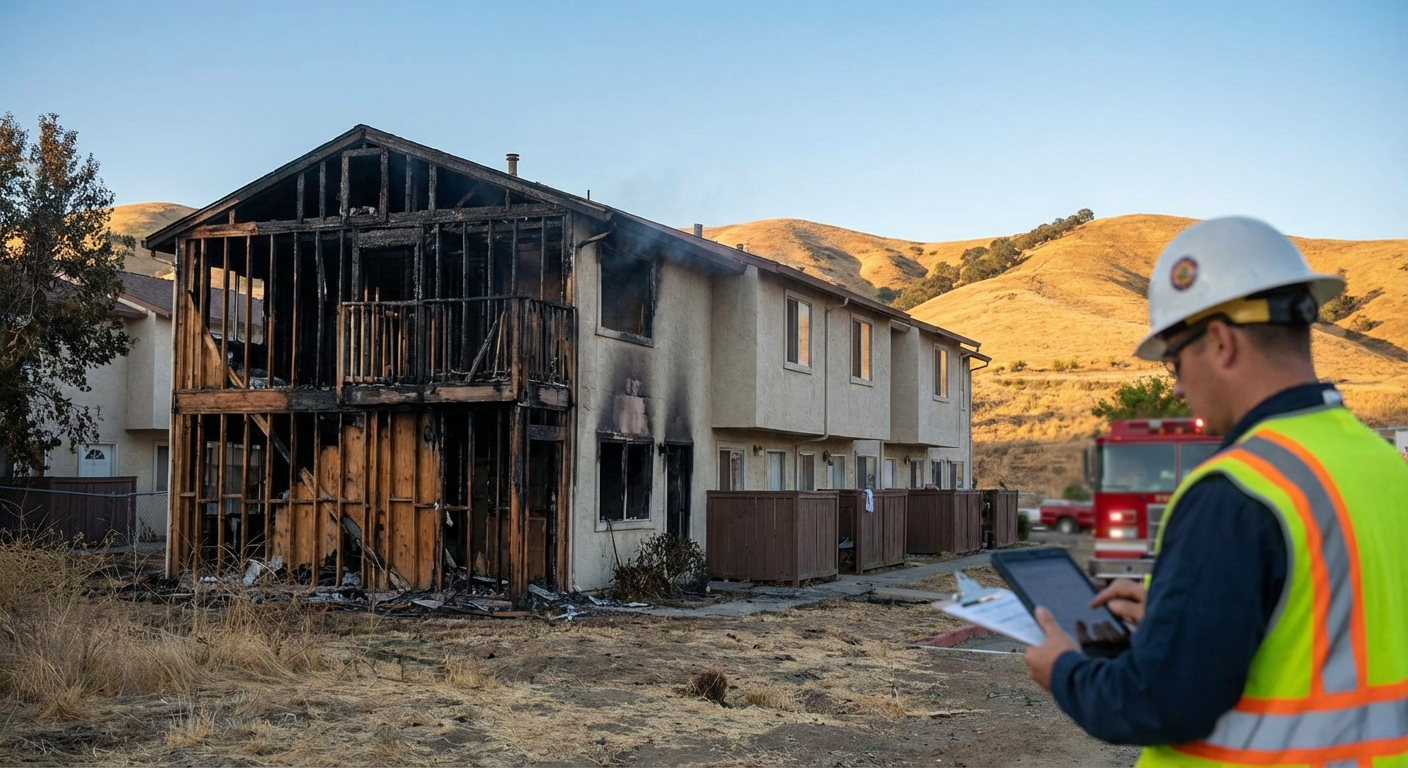
While your HO-6 handles your personal space, the master policy is busy with the larger picture. It covers the structural integrity of the building, the common areas, and often the cost of debris removal for the entire complex. If the roof burns, the master policy pays to replace it. If the exterior walls are charred, that’s their domain.
Which brings up something most people miss. Even if the master policy covers the building’s structure, it won’t cover your personal belongings. Nor will it pay for your temporary housing. That’s all on your HO-6. So, while the HOA deals with the big picture, you’re responsible for your own corner of the world.
4. Spotting the Gaps: Walls-In and Loss Assessment
These two areas are where many condo owners get caught off guard after a fire. They’re critical to understand.
Walls-In Coverage: It’s Not Always There
As mentioned, master policies vary. If your HOA has a “bare walls-in” policy, it means they’re only covering the studs and drywall. Everything *inside* that – your kitchen cabinets, bathroom fixtures, flooring, even the paint – is your responsibility. Without adequate “dwelling coverage” on your HO-6, you’ll be paying out of pocket to rebuild your interior. That’s a huge expense, easily tens of thousands of dollars, maybe more if you have high-end finishes.
Loss Assessment: The HOA’s Bill, Your Wallet
Sometimes, a major disaster like a widespread fire causes damage that exceeds the master policy’s limits. Or, the deductible on the master policy might be incredibly high – we’re talking $25,000, $50,000, or even $100,000, especially in high-risk fire zones. When this happens, the HOA can “assess” the shortfall to unit owners. This means they send you a bill for your share of the uncovered costs.
Your HO-6 policy can include “loss assessment coverage.” This is absolutely something you want, especially in California. It pays your share of these unexpected HOA bills. Imagine a $50,000 master policy deductible split among 100 units – that’s $500 per unit. Manageable. But what if it’s a $100,000 deductible split among 10 units? That’s $10,000 you’d owe. Loss assessment coverage protects you from that hit.
5. The Reality of Fire Insurance in California Today
It’s no secret: getting and keeping fire insurance in California has become a challenge. Wildfires are more frequent and destructive. Insurers like State Farm, AAA, and Farmers have pulled back from certain areas, declined to renew policies, or significantly raised premiums. We’ve seen premiums jump 40% between 2022 and 2024 for many homeowners, and condo owners aren’t immune.
Many Californians are finding themselves forced onto the FAIR Plan – California’s “insurer of last resort.” The FAIR Plan provides basic fire coverage, but it’s often more expensive and less comprehensive than a standard policy. You’ll typically need to buy a “Difference in Conditions” (DIC) policy from a separate insurer to fill in the gaps for things like liability and theft. It’s a patchwork solution, and it’s not ideal, but for some, it’s the only option.
The insurance landscape is constantly shifting, thanks to factors like climate change, development in wildfire-prone areas, and regulatory changes like those under Prop 103. Staying informed and working with an expert is more important than ever.
6. Protecting Your Stuff: Personal Property Coverage
Your personal belongings are probably worth more than you think. Take a moment to walk through your condo and mentally tally up the value of your furniture, clothes, electronics, kitchenware, and sentimental items. Most people underestimate this by a wide margin.
When you’re choosing personal property coverage, always opt for “replacement cost value” (RCV) over “actual cash value” (ACV). With RCV, if your five-year-old TV burns up, the policy pays for a brand-new comparable TV. With ACV, it’d pay you what that five-year-old TV was worth just before the fire – a lot less. The difference in premium for RCV is usually small compared to the benefit after a fire.
Also, consider special limits. Most policies have limits on high-value items like jewelry, furs, art, or firearms. If you have expensive pieces, you might need to “schedule” them separately on your policy for full coverage.
7. Where Will You Go? Additional Living Expenses (ALE)
A fire doesn’t just destroy your home; it displaces you. You can’t live in a charred condo. Your HO-6 policy includes Additional Living Expenses (ALE) coverage, which pays for your temporary housing and extra costs while your unit is being repaired. This can include hotel stays, rental costs for a temporary apartment, increased food expenses (because you can’t cook at home), and even laundry services.
It’s easy to overlook this, but it’s incredibly important. Repairs can take months, sometimes even a year or more, especially if the entire building needs extensive work. Those daily costs add up fast. Make sure your ALE limits are sufficient to cover an extended displacement period. A typical policy might offer 12 or 24 months of coverage, or a specific dollar amount. Don’t skimp here.
8. Finding the Right Policy Amidst the Chaos
With insurers pulling out and premiums skyrocketing, finding solid condo fire insurance in California can feel like a quest. This is where an experienced insurance professional makes all the difference. Someone who understands the unique challenges of the California market, the nuances of HOA master policies, and how to tailor an HO-6 to truly protect you.
Karl Susman of California Condo Coverage (CA License #OB75129) has been helping Californians navigate these waters for years. He and his team specialize in finding coverage that fits your specific needs, even in high-risk areas. They know the ins and outs of the FAIR Plan, the DIC policies, and how to bridge the gaps between your HOA’s coverage and your personal exposure. You don’t want to guess when it comes to protecting your largest asset.
Get a free quote for your California condo insurance today.
9. When the Smoke Clears: Making a Fire Claim
If the unthinkable happens, navigating a fire claim can be overwhelming. Here’s a quick rundown of what you’ll need to do:
- Safety First: Don’t enter a damaged unit until authorities say it’s safe.
- Notify Your HOA: They’ll need to contact the master policy insurer.
- Contact Your Insurer: Call your HO-6 provider immediately. They’ll assign a claims adjuster.
- Document Everything: Take photos and videos of all damage. Make a detailed list of damaged or destroyed personal property. Keep receipts for any emergency repairs or temporary living expenses.
- Don’t Throw Anything Away: Even burnt items might need to be inspected by the adjuster.
- Be Patient: Fire claims are complex and can take time.
Having a good agent like Karl Susman can also smooth this process. They can act as an advocate, helping you understand the claims process and ensuring you get what you’re owed.
California’s fire season is a year-round concern in many areas. Protecting your condo means understanding your policies, knowing the risks, and making smart choices. Don’t wait until the smoke alarm goes off to realize you’re underinsured.
Don’t wait until it’s too late. Protect your condo from fire with the right coverage.
Common Questions About Condo Fire Insurance
Is my HOA’s master policy enough for fire damage?
Not usually. The master policy covers the building’s structure and common areas. It won’t cover your personal belongings, improvements you’ve made to your unit, or your living expenses if you’re displaced. It also won’t protect you from loss assessments if the master policy’s limits are exceeded or its deductible is high. You absolutely need your own HO-6 policy.
What if my insurer non-renews my policy because of fire risk?
This is a common issue in California. If your insurer non-renews, your primary option might be the California FAIR Plan. This provides basic fire coverage, but you’ll likely need a separate “Difference in Conditions” (DIC) policy to cover other perils like liability, theft, and water damage. It’s a two-policy solution, often more expensive, but it ensures you have some protection. An agent like Karl Susman can help you piece this together.
Does my HO-6 cover smoke damage?
Yes, typically. Fire insurance policies usually cover damage caused by smoke, soot, and the actual flames. If a fire happens nearby and your condo suffers smoke damage without direct flame contact, your HO-6 should still respond, covering cleaning and repair costs for your unit’s interior and personal property.
How much personal property coverage do I really need?
It’s smart to do a home inventory. Walk through your condo and estimate the replacement cost of all your belongings. Many people find they need between $50,000 and $100,000, but it can be more if you have a lot of expensive items. Remember to choose “replacement cost value” (RCV) for this coverage, not “actual cash value” (ACV), for better protection.
This article is for informational purposes only and does not constitute financial advice.